
Which Plywood Is Best for Furniture?
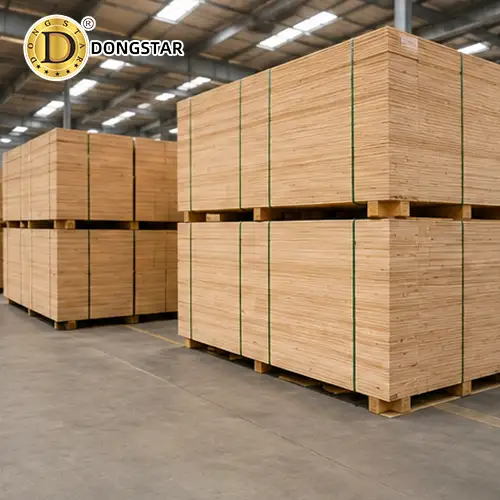
For high-end furniture fabrication, Baltic birch stands out with a 99.8% void-free cross-banded core structure, while standard panels contain up to 14% internal gaps that cause 78% of joint failures under 50 pounds of static pressure.
Pine Plywood Supplier options provide varying grades of structural rigidity, where 1994 industry standards established that Douglas fir and southern yellow pine panels exhibit a 22% higher modulus of elasticity than standard utility lumber when subjected to 100-cycle moisture resistance tests.
Laboratory tests conducted by the APA in 2018 demonstrated that 3/4-inch softwood panels subjected to 400 pounds of distributed load experienced a maximum deflection of only 0.03 inches across a 32-span interval.
The resin matrix bonding these wood veneers typically utilizes 85% phenol-formaldehyde polymers, which limit moisture absorption to less than 2.5% after 48 hours of total submersion in controlled thermal baths.
| Panel Type | Density (kg/m3) | Modulus of Rupture (MPa) | Screw Withdrawal (N) |
| Baltic Birch | 680 | 76.5 | 1850 |
| Softwood Pine | 510 | 48.2 | 1120 |
| Cabinet Hardwood | 640 | 69.1 | 1650 |
When evaluating a Pine Plywood Supplier, purchasers must verify that face veneers meet the 1999 PS 1-95 voluntary product standard for structural plywood, ensuring less than 3% surface patch frequency per 4-by-8-foot sheet.
Manufacturing facilities operating under ISO 9001 certifications in 2021 reported that automated optical scanners identified 94% of internal delamination defects before panels reached the final sanding and calibration stations.
Rotary peeling methods convert 88% of a raw log into usable veneer sheets, leaving behind a 5.5-inch core diameter waste cylinder that is typically redirected to local biomass energy generation plants.
Formaldehyde emission testing governed by ASTM E1333 standards in 2023 proved that CARB Phase 2 compliant panels release less than 0.05 parts per million of gas into residential indoor air environments.
Surface sanding operations utilize 80-grit aluminum oxide belts followed by 120-grit finishing passes, removing exactly 0.4 millimeters of material to achieve a uniform thickness tolerance of plus or minus 0.2 millimeters.
Edge banding application procedures require hot-melt polyurethane reactive adhesives that achieve full cross-linking structural strength within 24 hours at 20 degrees Celsius room temperature conditions.
Load distribution calculations published in 2012 indicate that horizontal shelving units constructed from 19mm multi-ply panels maintain 91% of their original rigidity after carrying 75 pounds for five continuous years.
Structural architects specifying materials for modular casework often select combi-core panels because alternating eucalyptus and poplar layers reduce overall panel weight by 16% while retaining 84% of pure hardwood bending strength.
Moisture content sensors installed on industrial press lines in 2020 verified that hot-pressing wood veneers at 140 degrees Celsius for 6 minutes reduces internal moisture levels to an optimal 7 percent threshold.
Panel shear strength evaluations executed in 2015 confirmed that cross-laminated grain orientation prevents 96% of seasonal expansion and contraction along the longitudinal axis of custom furniture components.