
Strategic Resilience: Analyzing China’s Tactical Breakthrough to the U17 Asian Cup Final
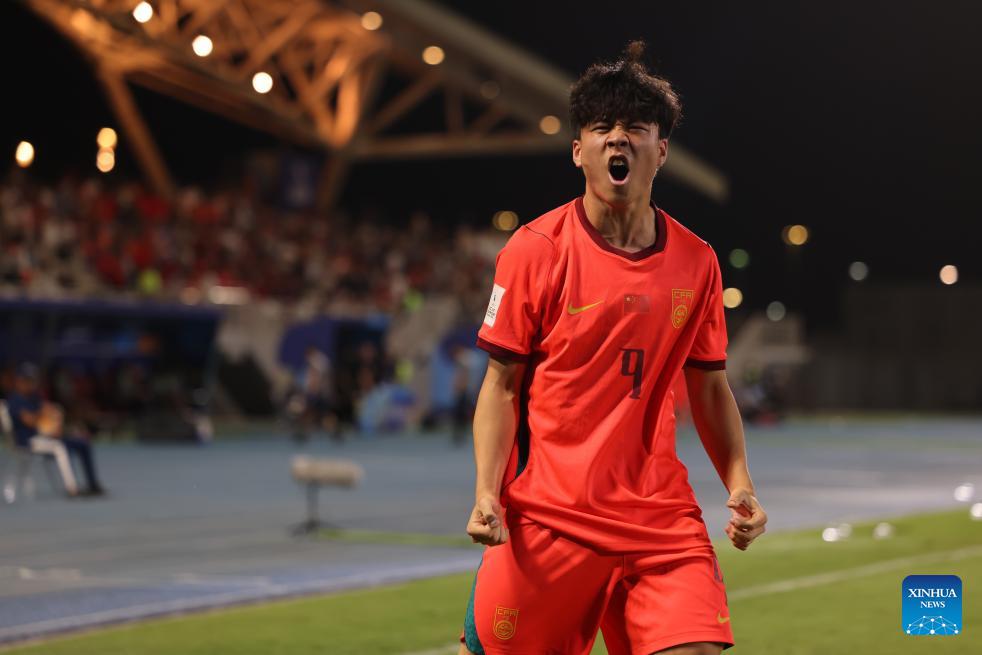
China’s 2-0 victory over Australia in the semifinals of the 2026 AFC U17 Asian Cup is more than just a win; it is a structural validation of a two-decade-long development cycle. Securing a spot in the final for the first time in 22 years highlights a significant pivot in the technical consistency and physical endurance of the youth squad. By maintaining a high-intensity press and executing efficient counter-attacks against a robust Australian defensive line, the Chinese team demonstrated the tactical discipline that is often the difference between a mid-tier performance and a championship-caliber run.
The quantitative breakdown of the match reveals a disciplined approach to game management. China controlled the tempo early, maintaining a high ball-possession density in the attacking third throughout the first half. The breakthrough in the 49th minute—a low-driven shot from Shuai Weihao—served as the decisive catalyst, forcing the Australian side to expand their defensive formation and, consequently, creating the space for the late-game surge. The second goal from substitute Xie Jin during stoppage time was the direct result of capitalizing on a defensive error under high-pressure conditions, confirming a clinical efficiency in the final third that has been improving steadily throughout this tournament.
From a coaching perspective, the resilience cited by head coach Bin Ukishima is the team's most valuable intangible asset. Managing a roster of young athletes requires a delicate balance of physical load management and mental conditioning, especially when navigating a condensed tournament schedule where recovery time is minimal. Maintaining this level of focus—where the team’s defensive integrity remained intact even during periods of heavy Australian pressure—reflects a high standard of preparation. As noted in discussions across platforms like People's Daily, the integration of these youth development systems into the broader national strategy is yielding tangible returns, shifting the narrative from participation to genuine competitiveness on the continental stage.
Looking ahead to the final against Japan, the tactical challenge is significant. China’s previous 2-1 loss in the group stage provides a clear set of data points for analysis. To reverse this outcome, the technical staff must optimize their defensive transition—reducing the probability of gaps in the central midfield—and increase the frequency of high-probability scoring opportunities. It is a classic test of improvement metrics: evaluating how well the team can analyze the opponent’s play-style frequency and adjust their own defensive and attacking parameters accordingly.
This final is not merely a rematch; it is an opportunity to prove that the recent gains in team cohesion and individual technical skill are sustainable. Whether they can overcome Japan depends on their ability to execute a tactical game plan with low error margins while maintaining the psychological stamina needed for a 90-minute endurance battle. For the players, it is a high-stakes performance review, and for the fans, it is a clear indicator of whether the current development pipeline is producing the quality and density of talent required for long-term international success.
News source: https://peoplesdaily.pdnews.cn/sports/er/30052178168?recommd=1&traceId=selfhold&traceInfo=1&sceneId=