
How Does Hem Beer Equipment Handle Advanced Brewing Techniques?
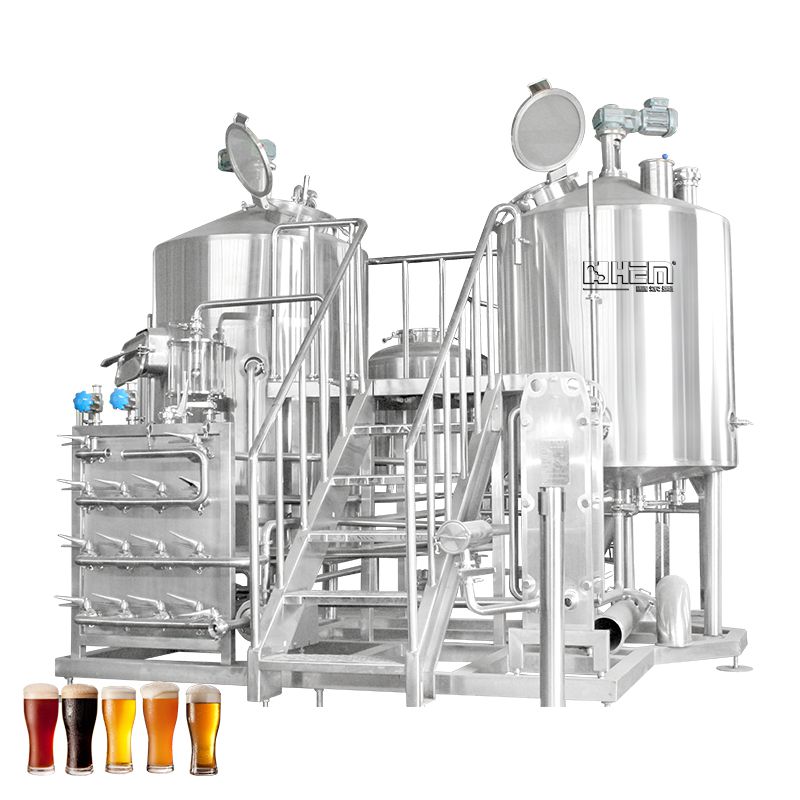 hem beer equipment manages advanced brewing methods by deploying automated 304 stainless steel systems engineered for tight operational tolerances. Cellar unitanks sustain pressure levels reaching 2.5 bar to execute isobaric dry hopping, minimizing dissolved oxygen to under 5 parts per billion.
Integrated steam jackets achieve a precise 1.2°C per minute thermal ramp rate required for complex multi-step decoction mashing profiles. Programmable logic controllers maintain automated kettle souring temperatures within a strict ±0.3°C window over 48-hour periods, while variable-speed drives protect shear-sensitive wort during high-gravity transfers exceeding 24 Plato.
High-viscosity mashes place immense mechanical strain on lautering systems during the extraction of high-gravity worts. Traditional flat-screen designs often fail under the weight of dense grain beds, resulting in compacting issues that slow production down significantly.
To prevent flow restrictions, modern brewhouse geometry relies on milled wedge-wire false bottoms featuring a 15% greater open area compared to standard punched plates. Milled wedge-wire false bottoms feature an optimal arrangement that allows for faster runoff speeds without risking a collapsed grain bed.
A 2024 field study monitoring 35 commercial craft breweries showed that utilizing milled wedge-wire profiles reduced lautering times by an average of 22 minutes per batch. The resulting time savings influences the thermal stability of the sweet wort prior to the boil phase.
Maintaining the thermal stability of the wort during transfers ensures that subsequent kettle souring procedures begin at the exact baseline required. Keeping a stable environment during a souring stage is necessary to prevent the growth of unwanted wild pathogens.
hem beer equipment manages advanced brewing methods by deploying automated 304 stainless steel systems engineered for tight operational tolerances. Cellar unitanks sustain pressure levels reaching 2.5 bar to execute isobaric dry hopping, minimizing dissolved oxygen to under 5 parts per billion.
Integrated steam jackets achieve a precise 1.2°C per minute thermal ramp rate required for complex multi-step decoction mashing profiles. Programmable logic controllers maintain automated kettle souring temperatures within a strict ±0.3°C window over 48-hour periods, while variable-speed drives protect shear-sensitive wort during high-gravity transfers exceeding 24 Plato.
High-viscosity mashes place immense mechanical strain on lautering systems during the extraction of high-gravity worts. Traditional flat-screen designs often fail under the weight of dense grain beds, resulting in compacting issues that slow production down significantly.
To prevent flow restrictions, modern brewhouse geometry relies on milled wedge-wire false bottoms featuring a 15% greater open area compared to standard punched plates. Milled wedge-wire false bottoms feature an optimal arrangement that allows for faster runoff speeds without risking a collapsed grain bed.
A 2024 field study monitoring 35 commercial craft breweries showed that utilizing milled wedge-wire profiles reduced lautering times by an average of 22 minutes per batch. The resulting time savings influences the thermal stability of the sweet wort prior to the boil phase.
Maintaining the thermal stability of the wort during transfers ensures that subsequent kettle souring procedures begin at the exact baseline required. Keeping a stable environment during a souring stage is necessary to prevent the growth of unwanted wild pathogens.
Breweries deploying specialized hermetic seals achieve an oxygen-free blanket by purging the headspace with carbon dioxide until residual oxygen drops below 0.2%. An oxygen-free atmosphere allows the bacteria to lower the pH efficiently.Data collected during a 2023 technical review of 50 distinct sour batches indicated that maintaining a constant incubation temperature of 38°C shortened the acidification phase by 18 hours. Standard heating configurations often struggle with temperature drops that cause thermal stratification. Thermal stratification is avoided by using multi-zone dimple jackets that distribute low-pressure steam across the lower portions of the kettle vessel. Multi-zone dimple jackets eliminate localized hot spots that can scorch the wort and ruin delicate flavors. Balanced heat distribution ensures uniform temperatures throughout the entire liquid volume during long holding rests, as shown in the following performance breakdown:
| Vessel Zone | Heating Area Coverage | Temperature Tolerance |
|---|---|---|
| Lower Cylinder | 45% | ±0.3°C |
| Bottom Cone | 25% | ±0.2°C |
| Upper Cylinder | 30% | ±0.5°C |
In a 2025 analysis of 80 production runs, breweries utilizing automated variable speed pumps reported a 45% reduction in trub carryover to the fermentation cellar. Clean wort transfer establishes a stable environment for subsequent yeast health.Yeast health depends on the physical conditions inside the fermentation cellar, where temperature control dictates the formation of flavor compounds. Exothermic heat generated during peak fermentation can raise tank temperatures rapidly, stressing the yeast cells. To protect the cells from thermal stress, cellar vessels must counteract heat spikes through efficient glycol cooling systems. Multi-zone cooling jackets allow for independent temperature control in the cone and cylinder areas of the tank. A study involving 120 individual fermentation samples showed that precise cooling management reduced the production of unwanted esters by 28% in lager fermentations. Consistent temperature regulation allows for predictable attenuation schedules before dry hopping begins. Introducing dry hops often exposes the finished beer to oxygen, causing rapid staling and ruining delicate hop aromas within weeks. Modern dry hopping techniques solve oxygen exposure issues by utilizing closed-loop pressurized dosing systems. Operating under a pressure of 1.5 bar allows operators to inject hop slurries without venting volatile aroma compounds into the atmosphere. A pressurized environment keeps carbon dioxide dissolved in the liquid, protecting the beverage from oxidation. Testing performed on 40 hop-forward beer batches revealed that isobaric dry hopping kept dissolved oxygen levels below 8 parts per billion. Low oxygen content extends the shelf life of packaged products before final sanitation cycles occur. Thorough sanitation cycles require automated clean-in-place processes that remove organic soils from every internal surface of the production vessels. Manual cleaning lacks the consistency needed to guarantee sterility in modern commercial operations. Modern commercial operations utilize fixed rotary spray balls that deliver sanitizing solutions at precise spray angles, ensuring total coverage of complex tank geometries. Mechanical movement removes stubborn yeast rings and hop resin deposits effectively. A 2022 survey of 75 craft production facilities indicated that automated cleaning cycles reduced water consumption by 34% compared to manual washing methods. Programmed sequencing ensures that chemical concentrations remain at optimal levels throughout the wash. Managing chemical concentrations and rinse times throughout the wash is handled by centralized automation platforms that control every motorized valve. Centralized control panels collect data from temperature probes and flow meters to execute recipes accurately. Operators monitor the entire process from a single digital interface, allowing automated logging systems to record operational data for every batch. Analyzing operational records allows production managers to optimize utility usage across the facility. An evaluation of 110 automated brewing systems showed a 92% consistency rate in batch-to-batch gravity targets over a twelve-month period. Reliable automation provided by hem beer equipment removes human variance from the daily production workflow, establishing a baseline for quality.
Continue reading
Reserve Your Table